Table of Contents
Opening the payphone
Most payphones have two keys – one for the top compartment and one for the vault (coin box). Once the lock is open, you need to turn the T-key (two equivalent types are pictured below) to actually disengage the locking mechanism. There are different types of locks. Opening a phone without the key can be a challenge. Various methods will be discussed here.
- If you have no keys at all, try opening the top first. Chances are, the vault key will be inside.
- Mounting screws (to the wall/pedestal) are usually behind both the top and bottom compartments.
- Start by identifying your payphone and lock type, then decide on the best way to open it (some methods are destructive).


This is still work-in-progress page, your feedback and input is highly appreciated!
Determine the payphone type
There are three main types of US single-slot payphones: Western Electric (coin slot and return on the left-hand side, handset cord sticking out from the front), GTE/Quadrum (coin slot and return on the right-hand side, handset cord on the side), and Nortel Millennium. Actually, the GTE looks slightly different from the Quadrum pictured below – the coin return lever is underneath the coin slot – but they are generally considered the same type.
Proceed with WE or GTE lock section accordingly.

Locks
Various links / documents:
- Notes on Western Electric (Bell System) Coin Telephone Locks by Matt Blaze: https://www.mattblaze.org/photos/misc/wecolock/
- Medeco brochure: payphone-mechanical-brochure-3.pdf
- Looking at [payphone] locks - Perspectives, 06.2002
WE-type locks
WE locks are used in single-slot WE payphones (coin return on the left) and Nortel Millennium phones. The top and bottom locks are interchangeable, but normally a different lock is used for the coin box. Millennium needs a slightly different lock for the coin box – there is a notch for the lock sensor.
WE 29A – typically used for the top compartment in both WE-style and Millennium phones, but usually by large Telcos (former US West/Qwest, for example). Notice the deep cut in the key; this is typical for 29 locks. There is a limited number of key combinations, and they are common for one region. It is possible to order one if the region/key number is known. It is also relatively easy to pick. Some western style phones (the AT&T private payphone, for example) use a 29B lock, which I believe is functionally the same as a 29A, except they were all keyed differently.
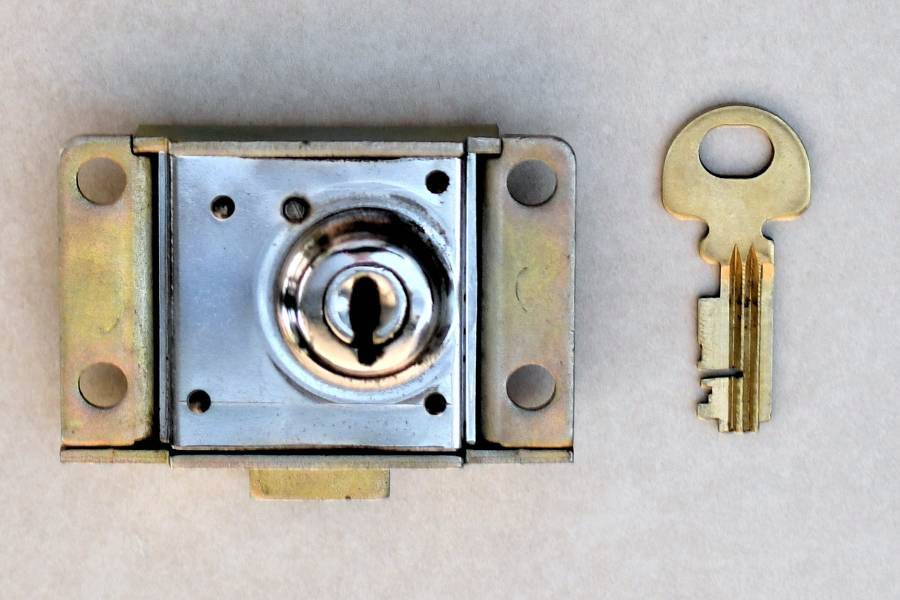
- If you know your region / lock number (e.g. 63 for Arizona), order it from Jim: https://www.ebay.com/itm/127426069081
- You can use common tools (screw driver, small hammer) to destroy the lock and open it. Video manual here – author unknown.
WE 30 A/B/C – typically used for the vault door. Nearly impossible to pick or drill. There are millions of key combinations. To open it, different methods need to be used rather than drilling/picking the lock. See notes by Matt Blaze. A slightly different variant was used with AT&T private payphones.
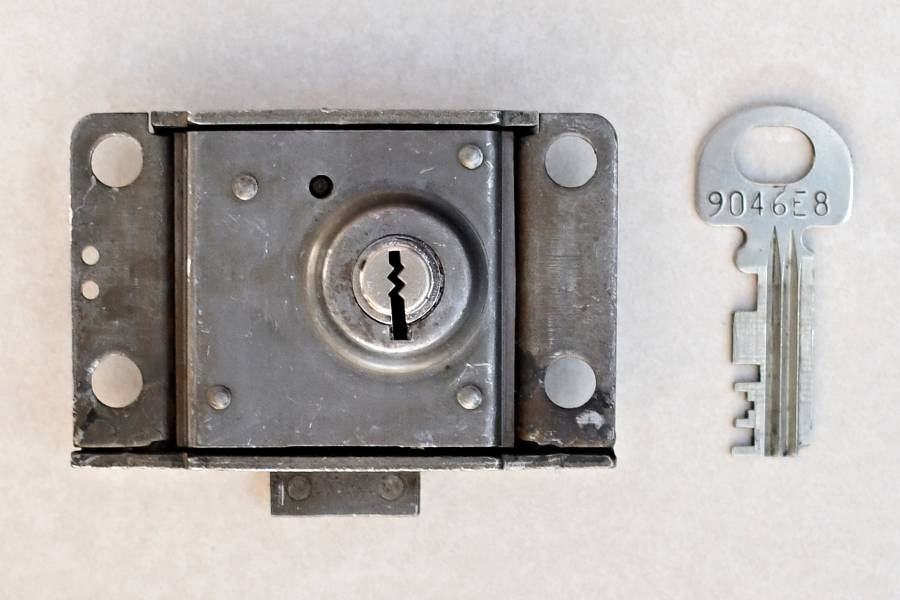
- Method 1: Least destructive: use air chisel on the lock. The mounting bolts may come off and eventually release the lock. Found by Andy Krop, but my success rate is low. Phone installed on the wall / pedestal – lower chances of success (vibrations are damped).
- Method 2: Use angle grinder to cut through the vault door. Destructive but efficient. Need to source a new vault door.
- Method 3: Use angle grinder to cut through the side of the payphone – cut the lock tongue. Destructive to payphone enclosure.
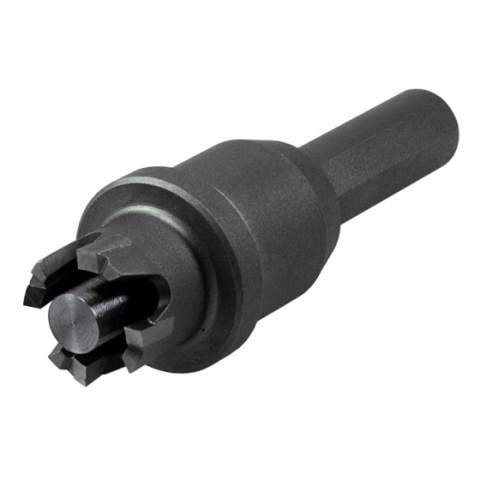
- Method 4: Drill a 1“ opening from the top compartment, then cut the lock. Destructive but not visible from outside. Video manual here – author unknown.
Medeco – this can be seen mostly in Nortel Millennium phones (both top and bottom), but some WE-style phones also used it, mostly for the vault door. It is possible to drill (although not very easily), but it is difficult to pick: each of the four pins inside has to be turned in the right direction as well. Unlike a typical Schlage key, where you just need to raise the pin to the shear line, you also need to rotate the Medeco pin in the right direction. If you look at a Medeco key, you'll see that some cuts are to the right, some are to the left, and some are in the center.
GTE/Quadrum types are effectively the same design in different housings. The upper lock on a GTE-style phone has only three pins.
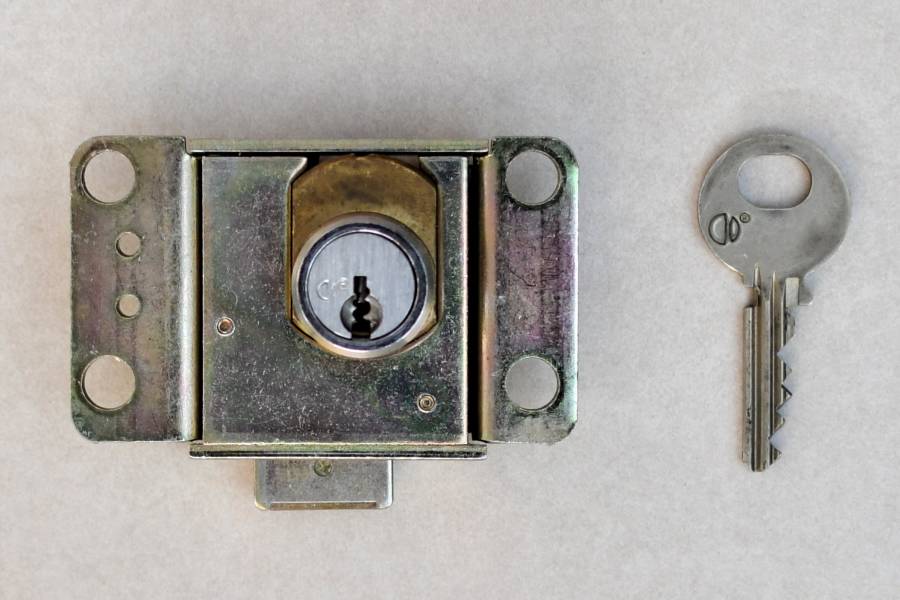
- Method 1: Air chisel like with WE 30C. Results are a bit unexpected, sometimes four mounting screws would come loose, sometimes the small drum mounting screws come loose; often times - eventually - it needs to be drilled anyway. But air chisel makes it easier to continue drilling.
- Method 2: Drill the lock, turn. Not easy, various sized drill bits needed. Pay attention not to drill too deep.
- Method 3: Angle grinder, same as for WE 30C, but it's a bit different for the Millennium.
Abloy – mostly used by COCOTs (private companies), one of the largest being FSH, both in WE-style phones (often made by Elcotel) and possibly Millennium phones (it has a notch for the sensor). Not to be confused with the GTE/Quadrum type. Relatively easy to defeat – especially when installed in the top compartment.
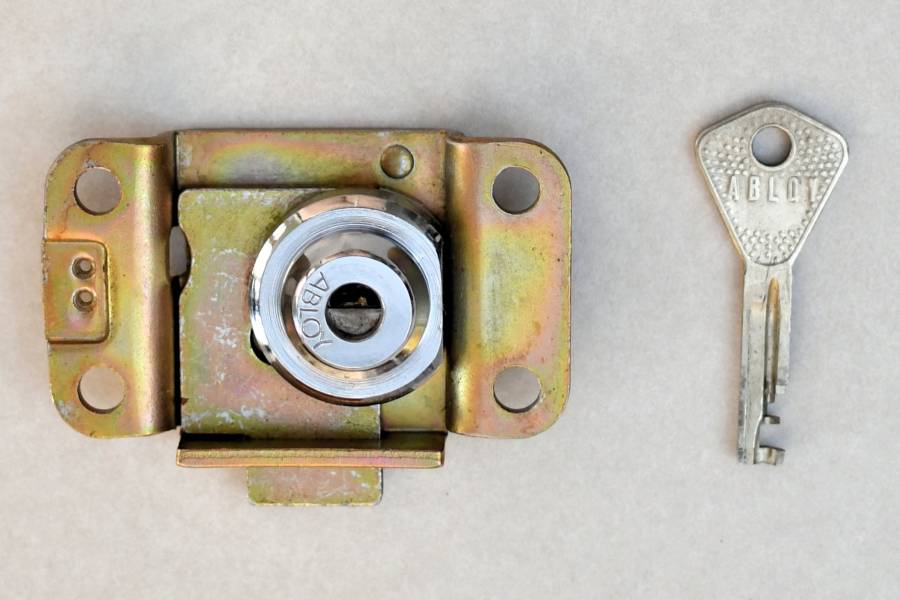
- Method 1: (top lock only) It's the same lock for top and bottom, but top compartment lock is sticking out. Easy to shave off the top using angle grinder (be careful not to damage the housing). Then, lock can be picked - remove the inner parts and turn it
- Method 2: Abloy burr, mostly available in Europe for approx. $50
- Method 3: drill, using 1/2” bit, remove inner parts, turn
- Method 4: air chisel (least recommended here)
GTE/Quadrum type locks
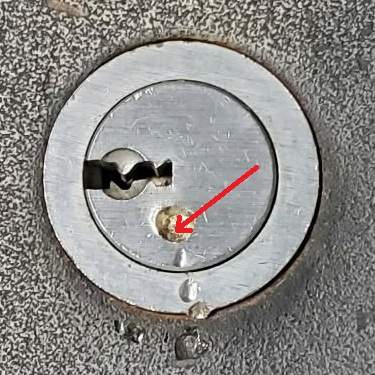
Top locks are of various types, including Medeco, Abloy, and generic ones, but they look similar – basically a bare cylinder and a mounting nut. The pictures below show the most common type (Medeco) with a standard BJ0004 key. This is one of the types supplied by GTE as a factory default, before the COCOT company applied its own lock. If you're lucky, BJ0004 (available online) may open it, but if the phone was removed from the street, the chances are low. There are certain ways to open it.
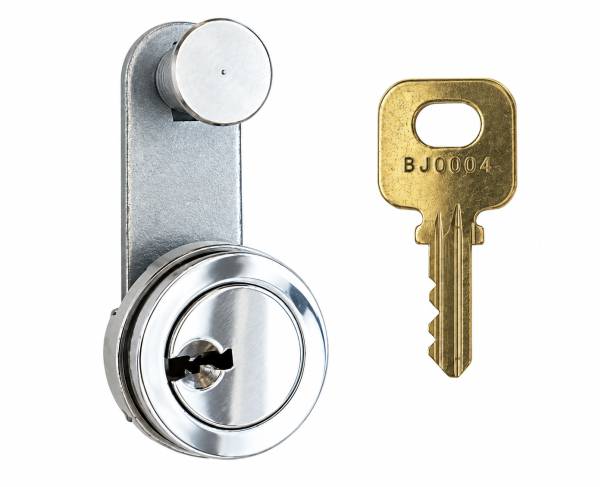
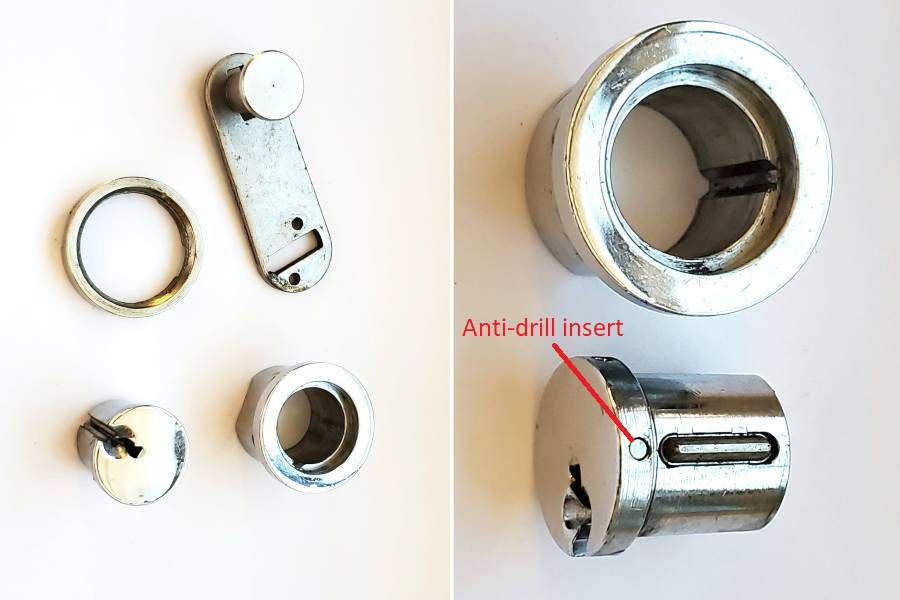
- Method 1: drill the lock, around where the locking pin is located (difficult, there is an anti-drill pin damaging drill bits, most often you'll end up drilling the whole inner drum)
- Method 2a: drill just outside the lock, targeting the mounting nut. Then pull the lock.
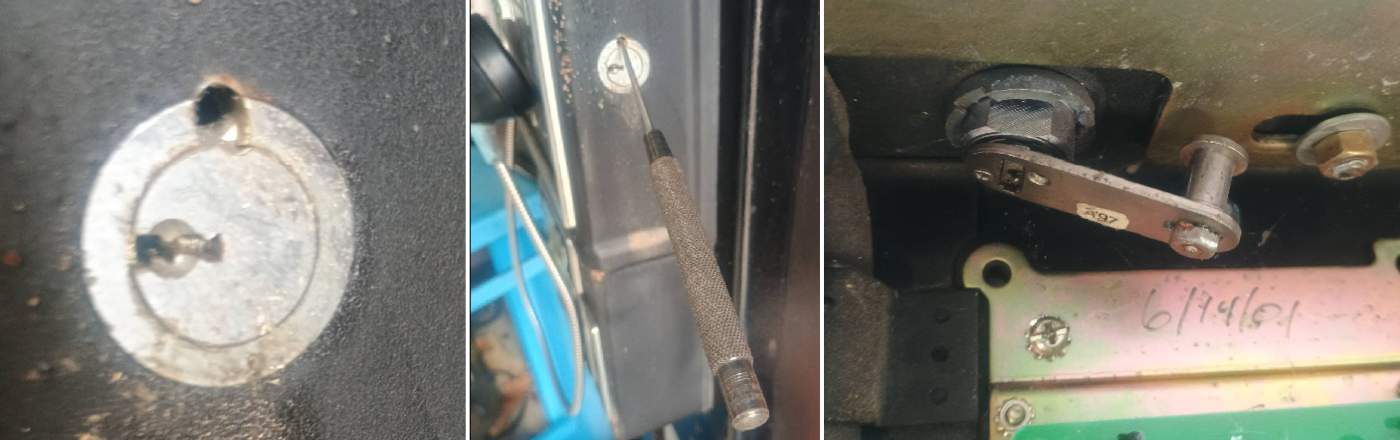
- Method 2b: drill a small hole in the lock housing at 12 o'clock. Use a punch and hit the arm to knock it loose from the lock. Then the T-handle to open. Illustration for details (by Tim K./fb)
- Method 3: air chisel. The mounting nut should go loose and eventually fall off. Wiggle the lock out. This may be the simpliest way to defeat the lock. Picture after removal.
- Method 4: some Abloy locks can be defeated easily by punching out the retainer clip on the tail
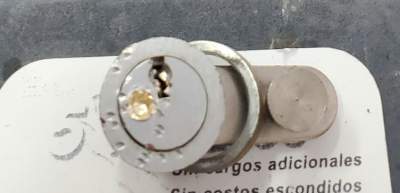
Bottom locks also exist in different models: Abloy (pictured below), Medeco, and various generic ones. There are certain ways to unlock them; however, an air chisel is NOT recommended here.
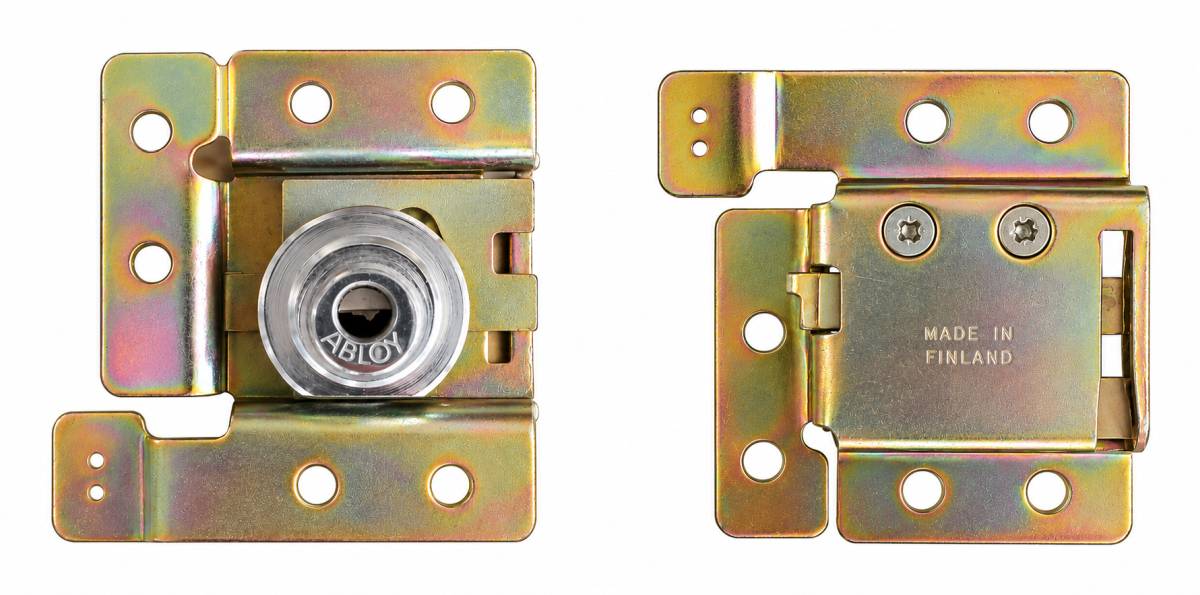
- Method 1: drill it out with 1/2“ drill
- for Abloy, you can use Abloy burr like in WE type lock
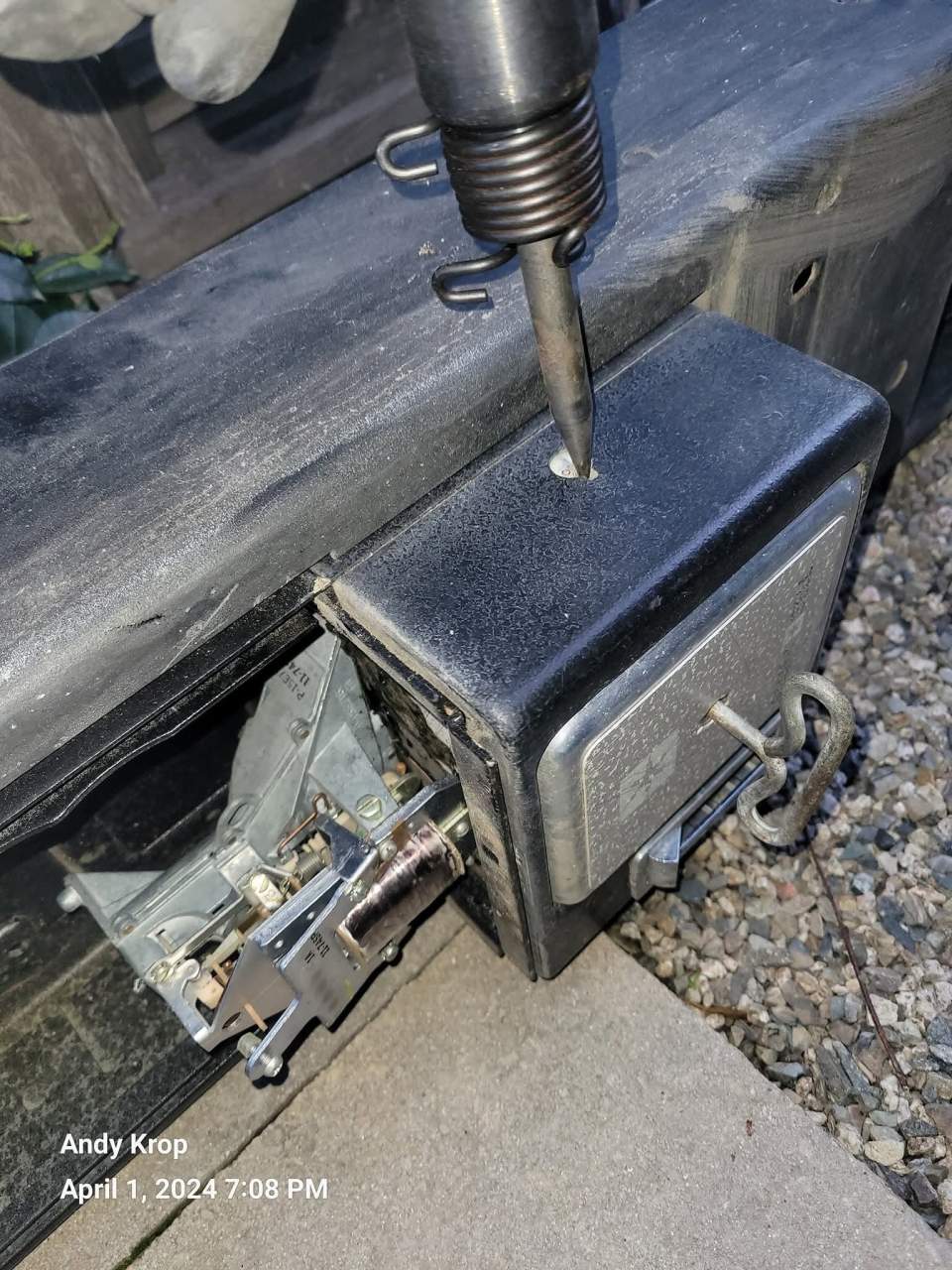
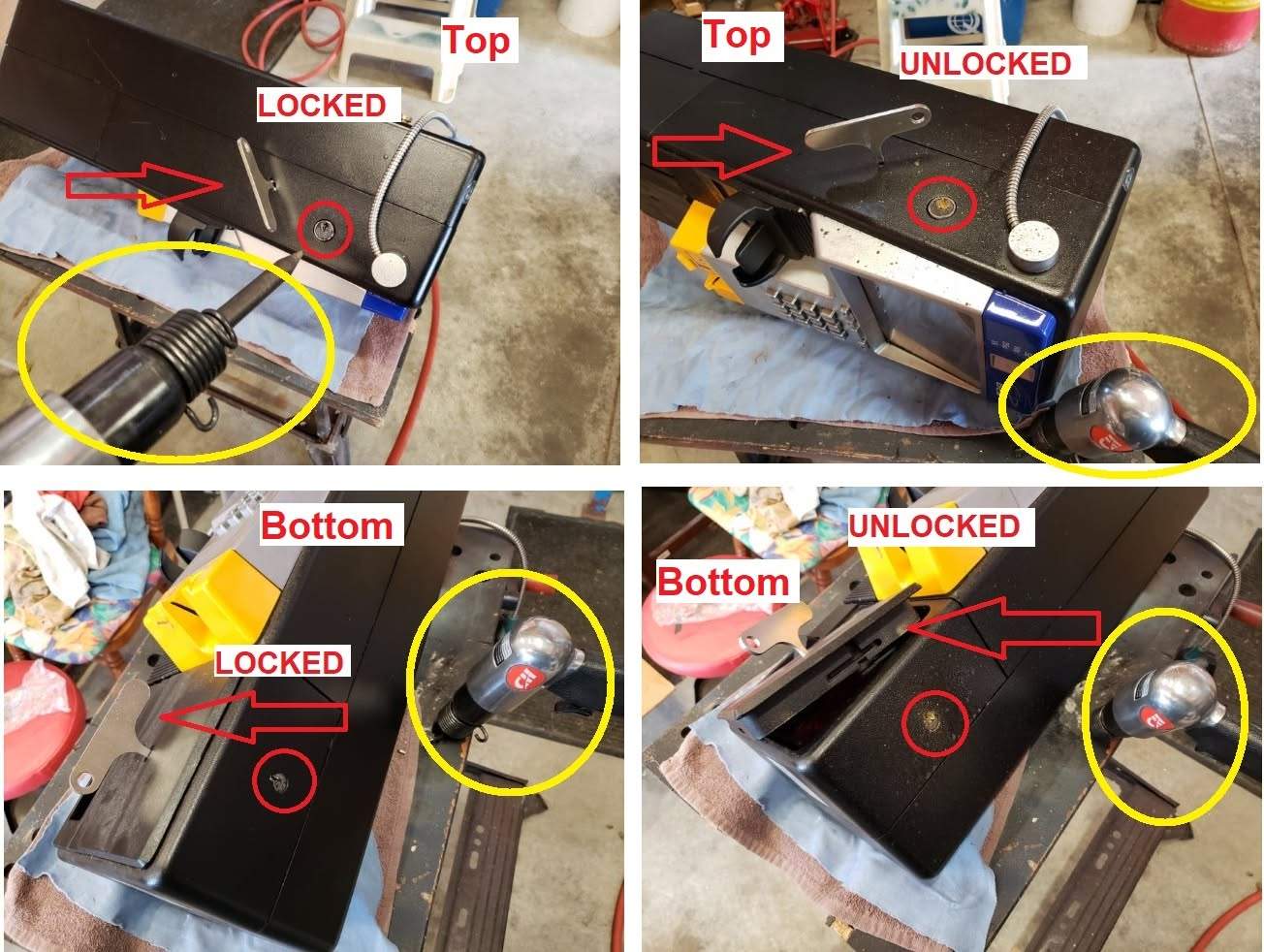
Air chisel method
This is not always working but might be worth trying. If unsuccessful, it still makes it easier for potential drilling of the lock. All pictures © Andy Krop.
- Anytime you are drilling or using the air chisel, setting the phone on the side, and allowing gravity to assist, makes it go easier.
Use of angle grinder to defeat vault lock
GTE/Quadrum are typically possible to open by means of drilling or air-chiseling the lock. With WE 30A/B/C locks though, it is challenging. In some cases the time is limited to remove the phone too. There are some slightly destructive methods in use.
- Use angle grinder to cut through the vault door. This takes just a few minutes. New vault door is needed. There is a risk of damaging the phone body if not applied carefully. Slightly different procedure for WE and Millennium phones. For details, refer to instructions below. Important to understand - you're not cutting through the lock, but the locking arm being part of the vault door.
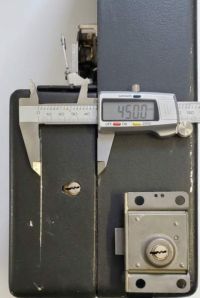
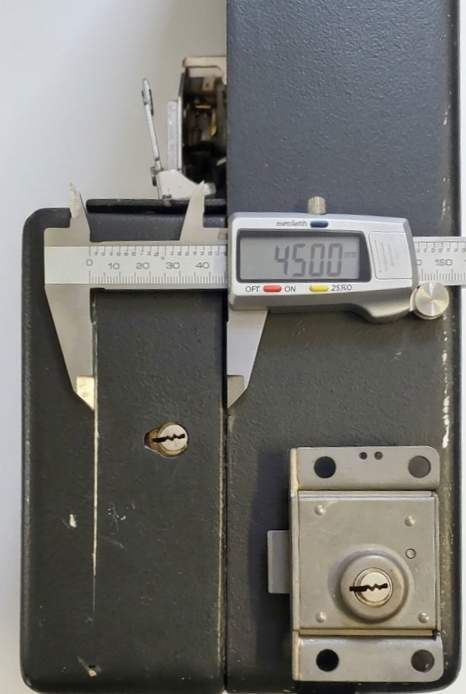
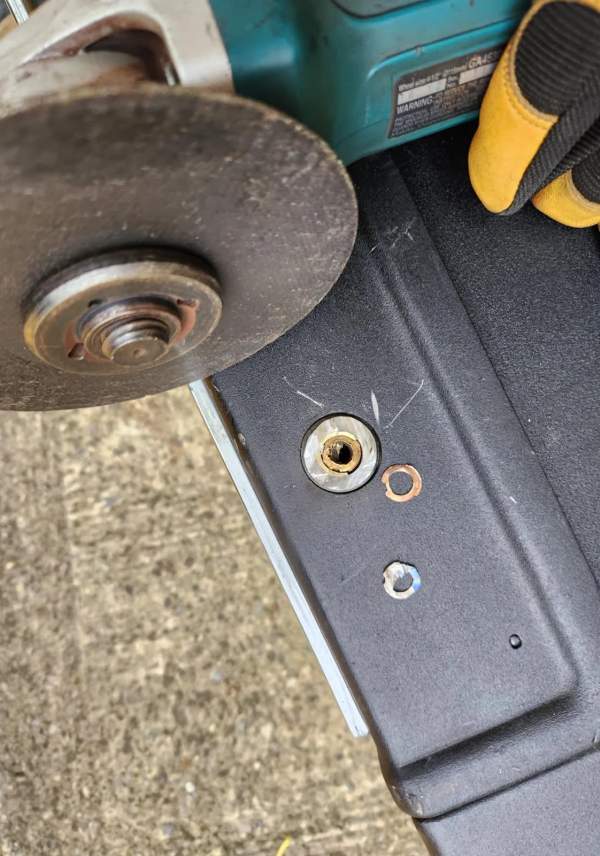
- Use angle grinder to cut the lock from the side. Phone body gets damaged, but it can be fixed later with epoxy. It is fast and easy but definitely more destructive, unless for some reason the vault door needs to be preserved. Measure exactly 45 mm as shown on the picture, then cut 1/2” above the lock hole, about 1“ deep, using 3.5” disc.
Tools required:
- Electric Grinder/Cordless Grinder
- 3 1/2“ Metal Cut Off grinding disc or smaller
- 4 1/2” Metal Cut Off grinding disc 1/16” thick (Take minimum 2 grinding discs along)
- 1 Large Flathead screwdriver or pry bar
- T-key (J-bar as used for Millennium phones works better)
- Safety Glasses & Gloves
- Tape measure & pencil for marking
Always wear protective glasses and gloves. Grinding process may cause severe injuries.
WE grinding instructions:
(by Jeff Popp)
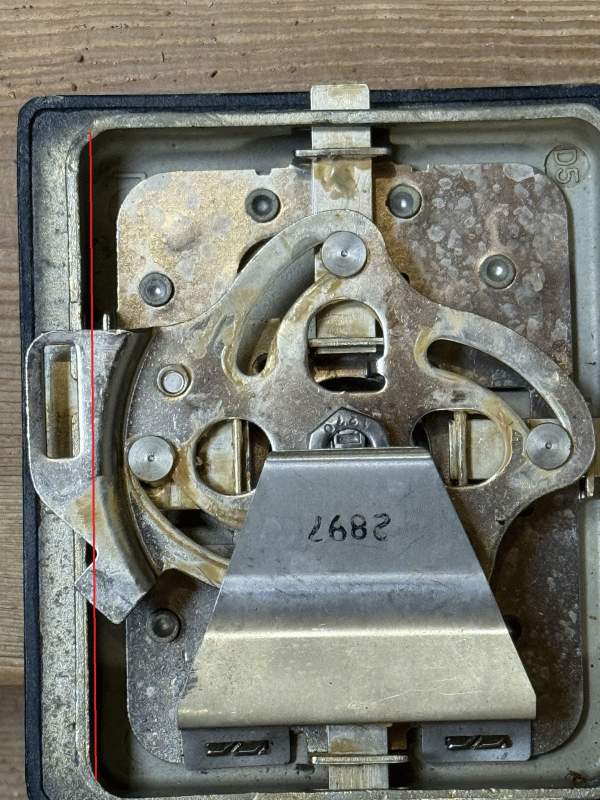
This method only works with WE-style phones (coin return on the left). First remove the upper housing. From the right edge of the vault door, measure 1/4 to 3/8 of an inch in (this is where the surface becomes flat) and mark a line up and down the vault door. Take the grinder – a smaller disc – and grind along the line you marked. Once you have cut through the door at the top and bottom. Grind further in at the center of the vault door, using a larger disc (4.5“) at least 1½ inches deep. Make sure you're grinding exactly perpendicular to the vault door surface. You will know you cut through the locks hardened steel. Then take your J-Bar to unlock the door. It may turn a bit, then continue cutting – you may need to repeat it 3 times.
Millennium grinding instructions:
(by Jeff Popp)
First remove the upper housing. From the right edge of the vault door, measure 5/8 of an inch in and mark a line up and down the vault door with a pencil. Take the grinder and grind along the line you marked. Once you have cut through the door at the top and bottom. Grind further in at the center of the vault door, at least 1½ inches. You will know you cut through the locks hardened steel. Then take your J-Bar to unlock the door. You may need to play around with the J-Bar for a bit to get the vault door off.
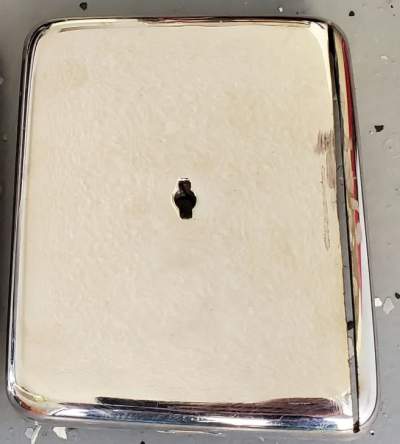
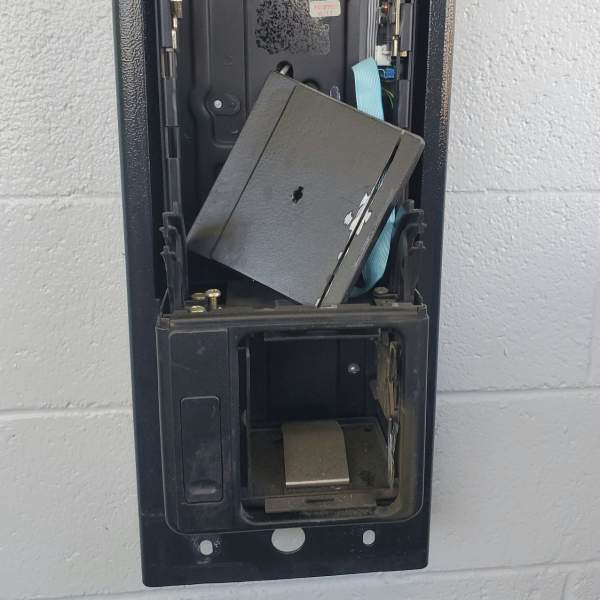
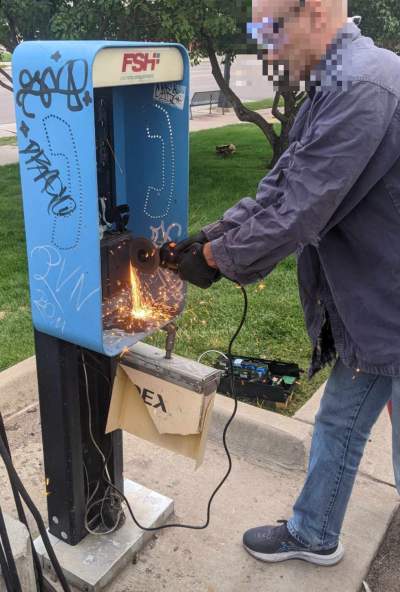
Pictures: 1) after successful removal, 2) rear view of the vault door – where you cut, 3) technician cutting the vault door due to the lock damage
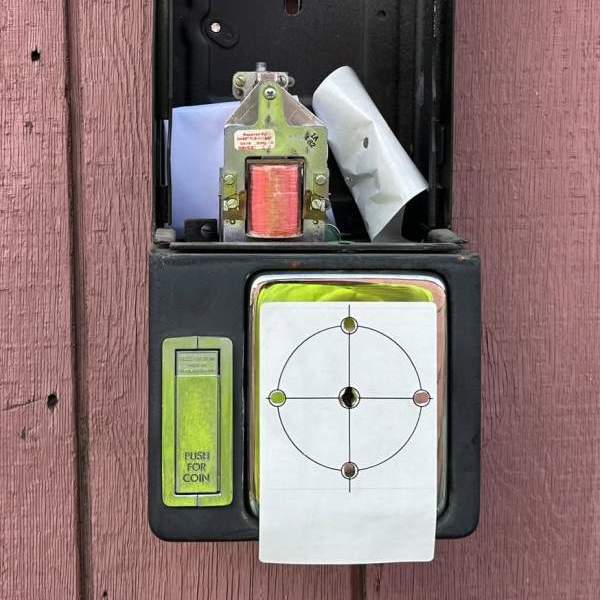
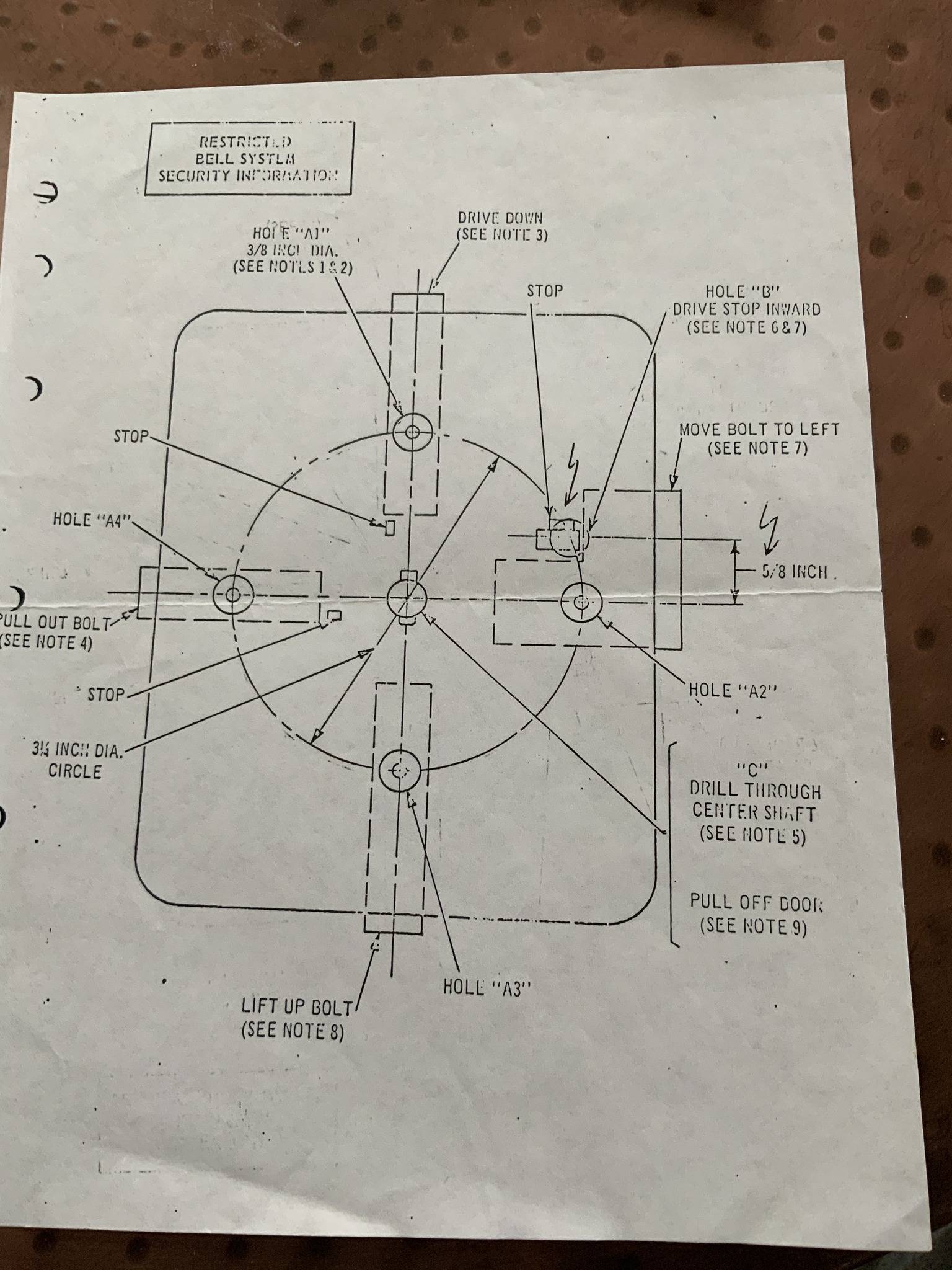
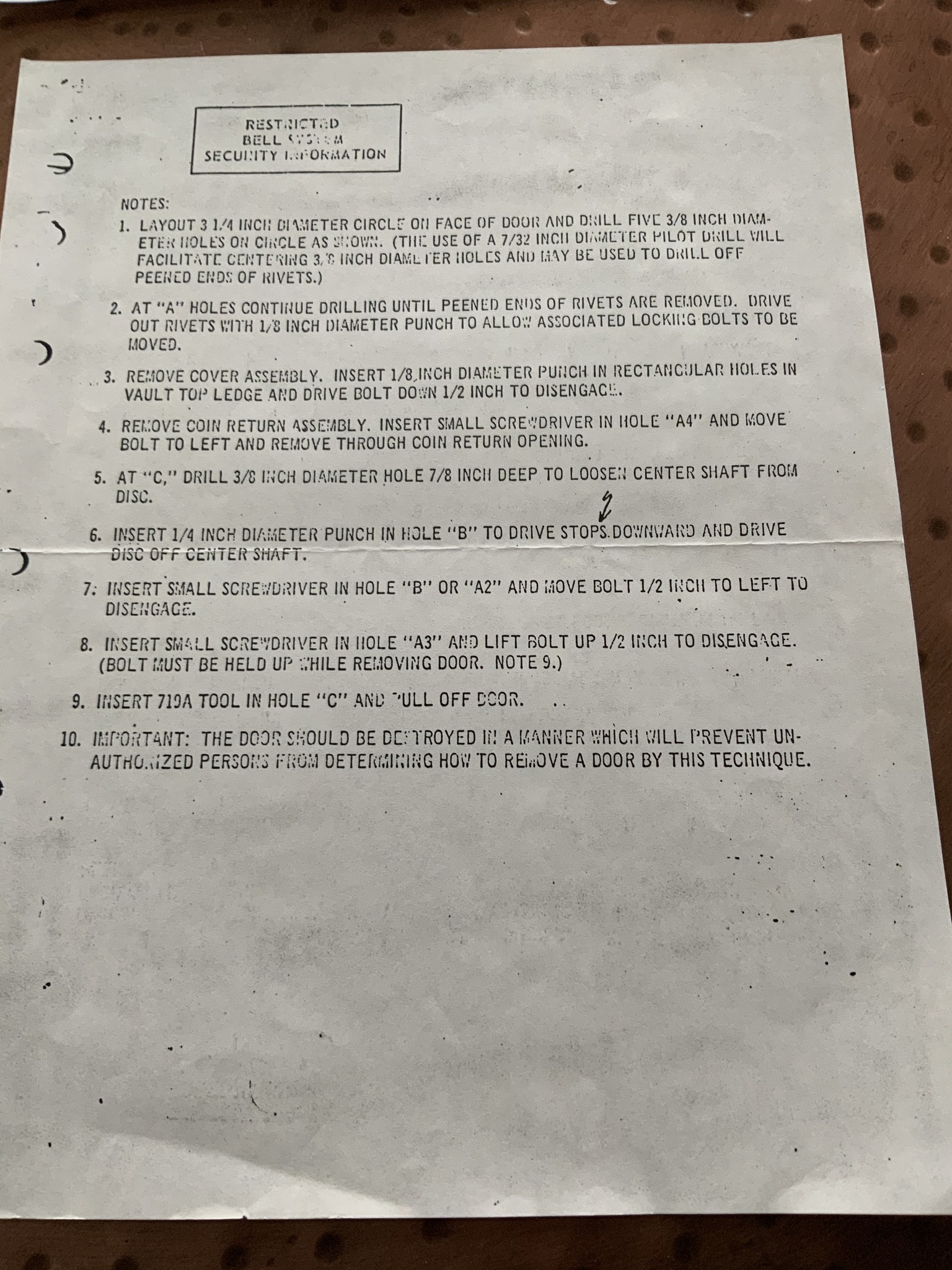
Use of a drill pattern to drill out the vault door
This method was developed by Bell. It's proven to work, but needs much more time and effort than using angle grinder. It is cleaner and more quiet though, so in some cases might work better.
Instructions - page 1
Instructions - page 2
Visio cut-out pattern to be printed on 4x6 sheet - by Shane Young (pdf & vsdx)